Goathill Quarry: Concerns over IBA use raised by local
- Stephen Kinninmonth
- Jan 19
- 4 min read
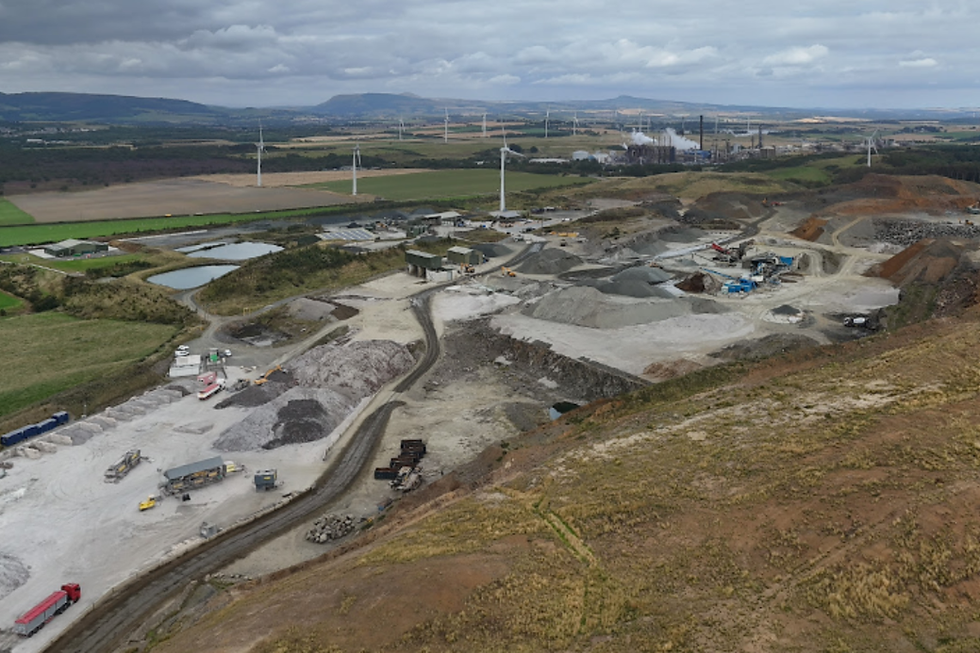
A local campaigner believes that Goathill Quarry is poisoning the Cowdenbeath area's water.
Concerns have been raised, with claims of water contamination linked to the handling of incinerator bottom ash (IBA)—a by-product of waste incineration that contains heavy metals and other toxic materials.
The long-running concerns centre on the possibility that contaminated runoff from stored IBA has polluted groundwater in the surrounding area.
Mark Ollis, a Hill of Beath resident, has claimed the activities undertaken at Goathill Quarry are having a drastic impact on the future health of those who live in the area.
He said: "The current ongoings at the quarry are causing extreme stress to locals, and is putting our lives at risk.
"Our water is being poisoned, and nothing is being done about it."
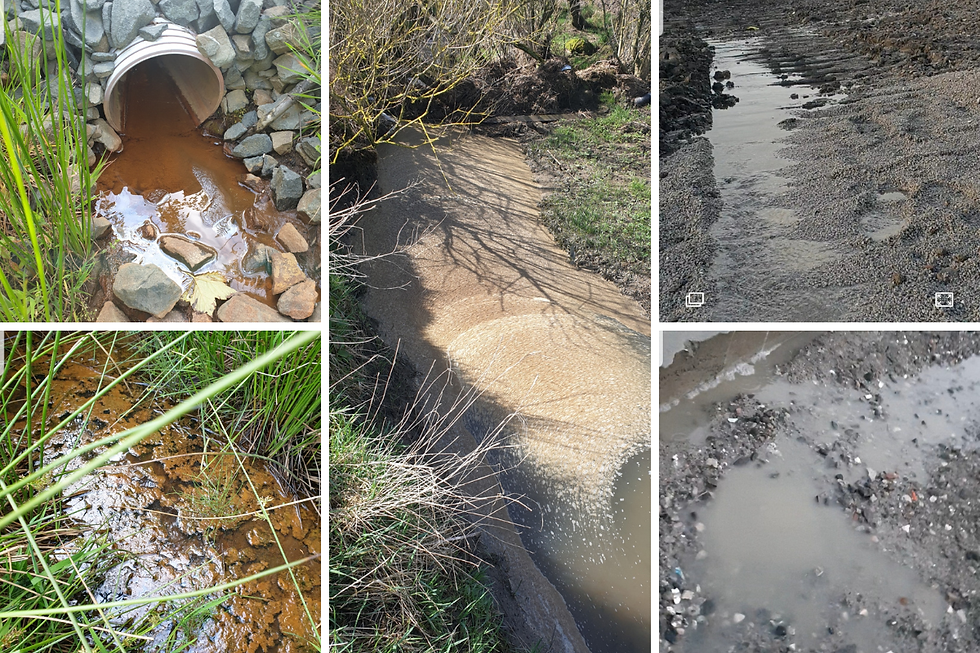
Water in the surrounding areas of the quarry. (Image: Mark Ollis)
Mr Ollis believes that the ash is not being covered sufficiently, therefore leaving local residents at risk.
In 2023, Fife Council approved the extension of the quarry’s lifespan from the original closure date of 2025 to 2060. As part of the extension, Forestry and Land Scotland leased a portion of Cullaloe Forest to the quarry.
Initial felling plans for Cullaloe Forest agreed that the forest could not be felled during the bird breeding season, however the condition was later removed after the felling had already taken place.
David Barratt, Fife Council’s councillor for Inverkeithing and Dalgety Bay, said: "Over the last couple years, I have dealt with complaints relating to the operation of Goathill Quarry.
"One of the primary activities at Goathill Quarry relates to the processing of Incinerator Bottom Ash (IBA), a by-product of the shift away from landfill and the increased use of energy from waste plants (incinerators) to deal with waste."
Councillor Barratt explained that IBA is a complex mixture, including ash, metals, glass, and stones, but also contains toxic substances, such as heavy metals. He said: "One of the first issues raised with me was the alleged lack of adequate containment of the IBA.
"Despite a requirement for the material to be kept on an impermeable concrete slab and for runoff to be treated, I was shown evidence the concrete slab sloped the wrong way and allowed runoff from the ash to flow directly into the surrounding environment.
"This allegation hadn't been identified by any of the official regulators including SEPA and Fife Council.
"The operator was eventually required to address this, but it highlights for me just how inadequate regulation of operations like this can be."

Water in the surrounding areas of the quarry. (Image: Mark Ollis)
Environmental reports that were sent in to The Press by Mr Ollis indicate that arsenic, iron, and lead have been detected in groundwater near the site, and the Scottish Environment Protection Agency (SEPA) issued a letter in February 2023 highlighting seven regulatory non-compliances at the site.
However, a SEPA spokesman said: "The letter issued by SEPA in 2023 is a standard regulation letter which highlights areas where the site is required to make improvements to bring working practices at the site back into compliance with their authorisation following a routine inspection.
"This is standard working practice for SEPA authorised sites. The non-compliances highlighted in 2023 have since been rectified and multiple inspections of the site have been conducted since 2023.
"Where SEPA finds improvements can be made at the site, we continue to require action to drive compliance."
SEPA said the groundwater contamination referenced in reports is linked to a pollution incident in 2017 that occurred outside the licensed area of the quarry. The spokesman said: "While the majority of the wastes were removed, SEPA have required monitoring of the area to be conducted to ensure any residual wastes are not escaping from the boundary of the site into the wider environment.
"Monitoring outside the site boundary has indicated that there is no movement of residual waste contaminants outside the site boundary from this event."
SEPA also reviewed recent photographs of discoloured water believed to be evidence of contamination.
"Our team have reviewed the images provided and concluded that they are outdated as some of the images were taken during the construction phase of the concrete pads, some are from ferruginous discharge linked to historic mine working in the area and unrelated to the site, and some refer to infrastructure that has been updated since the images were taken."
Fife Council has acknowledged public concern and emphasised the importance of inter-agency regulation.
Mary Stewart, service manager at Fife Council, said: "The ongoing regulation of activity at quarries is complex, involving multiple agencies with specific interests in different aspects of the operation.
"Fife Council work with partners including SEPA to monitor and regulate activities at quarries across Fife, including Goathill."
Colliers have not responded to a request for comment.



Comments